What happens at your child's eye exam?
Published: July 27, 2026
In short
A child's eye exam is short and painless, and the effects of the drops are temporary. Checks done without waiting for complaints catch quiet problems like amblyopia in their most treatable period.
An eye exam looms larger in many parents' minds than it should: the child seems to see fine, there are no complaints, the appointment slips. Yet problems like lazy eye need an exam precisely because they produce no complaints, and the visit itself is shorter and easier than expected.
This article walks through what typically happens at a child's eye exam, the matter of the drops, and the questions worth asking afterwards. It is general information; every clinic runs its own process.
The exam, step by step
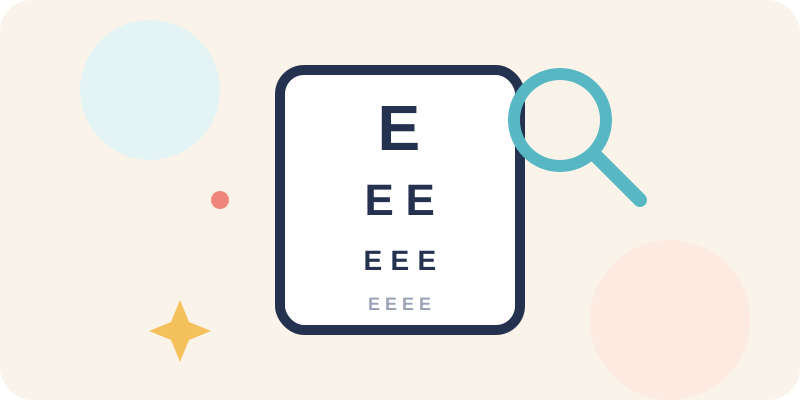
It usually starts with a short conversation: family history of lazy eye or strabismus, birth history, behaviors you have noticed. Then visual acuity is measured; children who cannot read yet get pictures or the tumbling E instead of letters, and matching games exist for the youngest.
Next the eyes' alignment and teamwork are assessed: the doctor briefly covers and uncovers one eye (the cover test) to see how the eyes settle, and may run simple depth-perception tests. None of this hurts.
About the drops
The most talked-about part of a child's exam is the drops. Because a child's focusing power is very strong, measuring the refractive error accurately is only possible with drops that temporarily relax that focusing.
The drops sting for a few seconds; for some hours afterwards near vision is blurry and light can be bothersome. These effects are expected and temporary. Planning the day around it (no homework right after, sunglasses at hand) makes things easier.
Practical tips with a young child
Avoid booking at nap time or on an empty stomach, bring a familiar toy, and describe the visit honestly in advance (we will look at lights, the drop stings a little, then it passes). It makes the exam easier for everyone.
One more thing: do not coach the answers. A child who guesses right on the vision test can end up hiding the problem; I don't know is a good answer in this test.
After the exam: what to ask
An exam ends one of three ways: all is well, glasses are needed, or a treatment plan begins. Whichever it is, leave with answers to these: what exactly is the diagnosis, what are the options, how and how often will progress be measured, when is the next check?
And the calendar reminder: even without complaints, checks in infancy, around ages 3 to 4, and at school entry catch quiet problems like lazy eye in their most treatable period.
Terms used here
- Visual acuity
- How much fine detail an eye can resolve.
- Cover test
- Briefly covering each eye in turn to assess alignment and the preferred eye.
- Cycloplegic exam
- A measurement with drops that relax focusing, revealing the true prescription.