How visual acuity is measured, and what the numbers mean
Published: July 27, 2026
In short
Visual acuity measures the level of detail an eye can resolve, and each eye is assessed separately. In amblyopia the critical finding is the difference between the eyes, and acuity alone says nothing about whether the eyes work together.
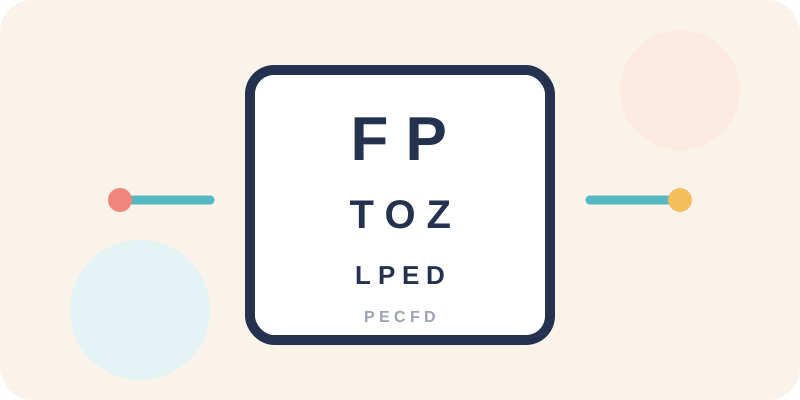
The measurement heard most often at an exam is visual acuity: values like 20/20, 6/6 or 0.6 are different ways of writing the same kind of result. So what exactly do these numbers tell you?
This article covers how the measurement is done, how it works with children who cannot read yet, and which finding matters most for amblyopia.
What does the measurement measure?
Visual acuity shows how fine a detail the eye can resolve. The letters on the chart shrink from top to bottom, and the smallest readable line gives the acuity value.
Different countries write it differently: 20/20, 6/6 and 1.0 all mean the same thing. As the value falls (0.4, say), the level of detail the eye can resolve has decreased.
The measurement is taken at a set distance under standard lighting, so trying it at home on a phone screen is no substitute for a clinical measurement.
How is a child who cannot read tested?
Picture charts can replace letters, with the child naming the shape they see. Another common method is the tumbling E test, where the child shows with their hand which way the arms of the E are pointing.
With younger children, matching is used: the child finds the shape the doctor shows on a card in their own hand. For babies there are different methods again, such as watching which image the gaze turns toward.
Not being able to read does not mean nothing can be measured.
Why is each eye measured separately?
This is the most critical point for amblyopia. A child looking with both eyes open can read the chart comfortably thanks to the better eye, leaving the weaker one entirely hidden.
So the measurement is always done one eye at a time, with the other covered. The finding that reveals amblyopia is often not the absolute value but the difference between the eyes.
It also matters that the child does not guess or peek through their fingers; a quiet, honest test is part of getting a real result.
Does acuity tell you everything?
No. Acuity shows one eye's level of detail; it says nothing about whether the eyes are working together.
A child can have good acuity in both eyes and still struggle noticeably on a depth perception test. That is why fusion and depth perception are assessed separately at an exam.
The same logic applies to follow-up during treatment: watching only the chart can miss the change in two-eyed vision.
Terms used here
- Visual acuity
- How much fine detail an eye can resolve, measured with a chart.
- Snellen chart
- The classic eye chart with letters that shrink from top to bottom.
- Tumbling E test
- A vision test for children who cannot read, in which they indicate which way the E points.