Fusion: how the brain turns two images into one
Published: July 27, 2026
In short
Fusion has two steps: the eyes hold the alignment, the brain merges the images. In amblyopia the chain breaks at its weakest link, which is why work that puts both eyes on the same task targets fusion directly.
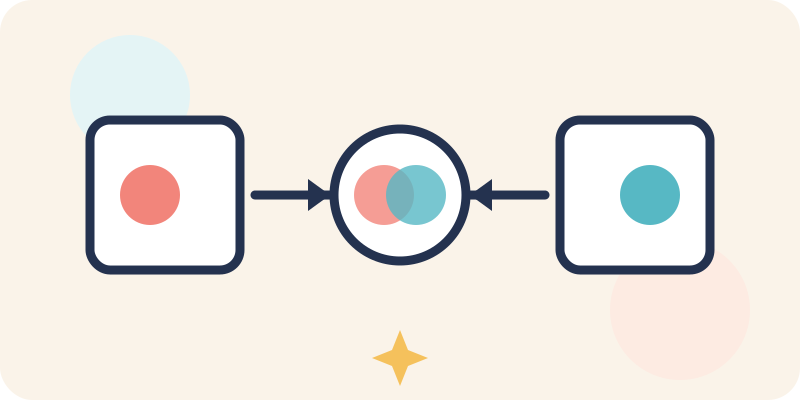
You have two eyes, yet you do not see two worlds. Something this ordinary is in fact the result of a process the brain runs continuously: fusion. Two separate eye images become one scene, and you never notice the merging happen.
This article covers how fusion works, which steps it is built from, and why it is among the first skills lost in amblyopia.
A job in two steps
The first step is motor fusion: the eye muscles constantly fine-tune alignment so both eyes point at the same spot. Your eyes turning inward as you follow an approaching object is the most visible form of that adjustment.
The second step is sensory fusion: in the visual cortex, the two aligned images are merged into a single perception. While doing so the brain also keeps the small difference between them and converts it into depth.
The two steps depend on each other. Without alignment there is no clean data to merge; without merging, holding alignment serves no purpose.
What happens when fusion breaks down
When two images cannot be merged, the expected result is double vision. In adults who develop strabismus later in life, that is the typical complaint, and it is genuinely distressing.
In children the brain is more flexible and usually takes another route: it suppresses one of the conflicting images. So the child does not see double and does not complain, but fusion never develops either. The absence of a complaint does not mean the system is healthy.
Where the chain breaks in amblyopia
If one eye's image is markedly blurry, the similarity sensory fusion needs is missing; the brain tries to merge two mismatched inputs and at some point gives up.
If the eyes are misaligned, the motor step fails from the start. Either way the outcome is the same: suppression takes over, fusion is never established, and depth perception cannot develop.
Fusion is therefore not a footnote in amblyopia treatment but a target in its own right.
Can fusion be regained?
Fusion is built on the experience of both eyes working at the same time, together. Methods that exercise one eye do not produce that experience; work that brings both eyes onto the same task aims at it directly.
This is where the logic of dichoptic training comes from: each eye is given a part of the scene, and the task can only be completed once the two parts merge in the brain. Fusion is not a by-product of the exercise, it is the rule of the game.
It is also why measuring progress at check-ups matters: fusion and depth perception are assessed independently of reading the chart.
Terms used here
- Fusion
- The brain making one scene out of the two eyes' images.
- Motor fusion
- The eyes constantly fine-tuning their alignment so the two images can be brought on top of each other.
- Sensory fusion
- The brain merging the two aligned images into a single perception.
- Diplopia
- Seeing one object as two images when fusion cannot be achieved.